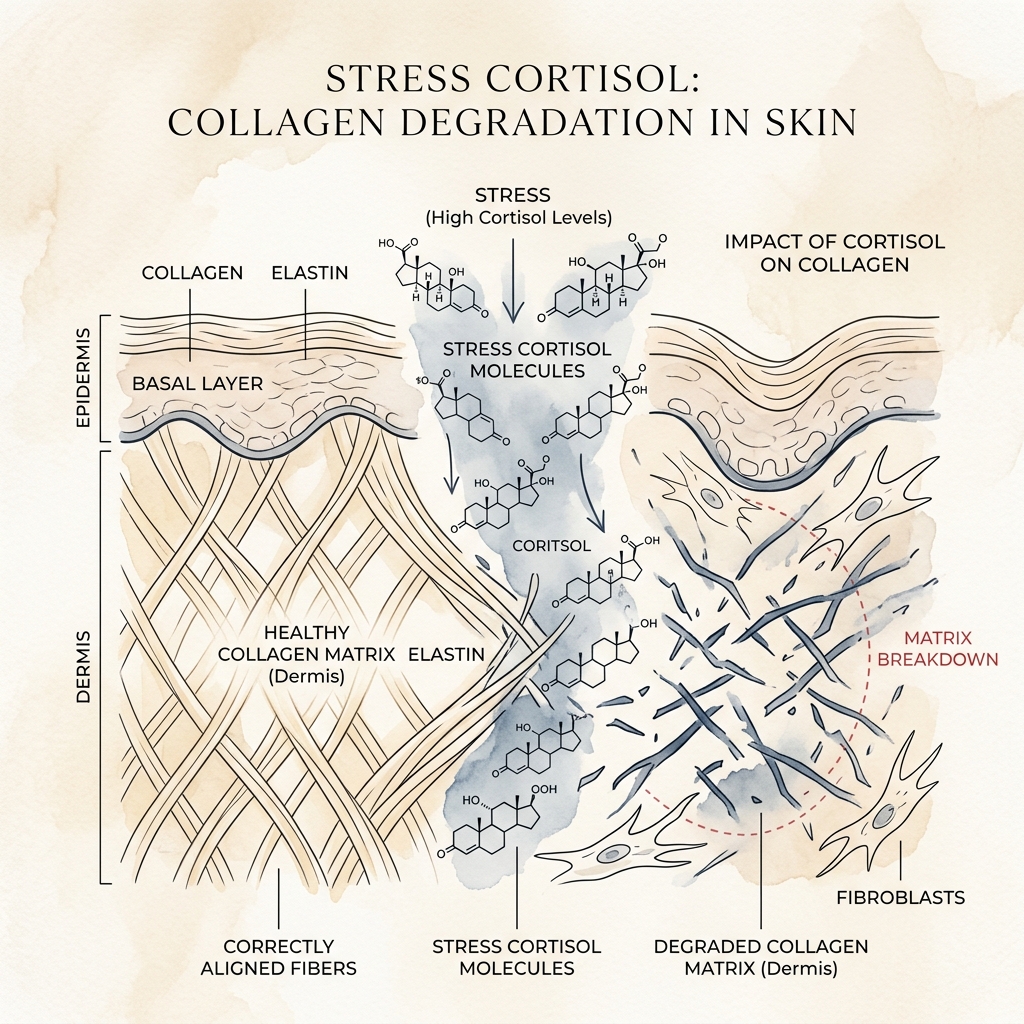
We often treat skin aging purely as a surface problem solved by creams and serums. However, the connection between our mental well-being and physical appearance is deeply biological. When stress levels rise, our skin pays the price, driven by a powerful catabolic hormone: Cortisol.
What is Cortisol?
Cortisol is commonly known as the body's primary 'stress hormone.' Produced by the adrenal glands, it is essential for regulating metabolism, controlling blood pressure, and managing the 'fight-or-flight' response. In short bursts, cortisol is life-saving. However, when chronic daily stress keeps cortisol levels persistently high, it transitions from a protective regulator to a destructive force.
The Biological Pathway: Cortisol and Collagen Breakdown
At a cellular level, cortisol is a catabolic hormone—meaning it breaks down complex molecules into simpler ones to release energy. In the skin, this catabolic nature targets proteins like collagen and elastin. High cortisol levels inhibit fibroblasts, the very cells responsible for synthesizing new collagen. Concurrently, it accelerates the degradation of existing collagen fibers, resulting in thinner, weaker skin that is highly susceptible to premature wrinkles and sagging.
Micro-Inflammation and Acne: The Double Blow
The damage doesn't stop at collagen. Elevated cortisol weakens the skin's barrier function, causing trans-epidermal water loss (dryness) and allowing environmental irritants to penetrate easily. Furthermore, cortisol stimulates sebaceous glands to produce excess sebum (oil). This combination of a weakened barrier, increased oiliness, and systemic inflammation creates the perfect environment for stress acne and persistent redness.
Lifestyle Medicine to Lower Cortisol and Protect Skin
To effectively slow down stress-induced skin aging, we must address the root cause by lowering systemic cortisol while reinforcing the skin externally:
- Prioritize Circadian Sleep: Deep sleep is when cortisol levels drop to their lowest, and cellular repair peaks. Aim for 7-8 hours of quality sleep, avoiding screens before bed.
- Mindful Topical Care: Use gentle, barrier-restoring ingredients like Ceramides, Hyaluronic Acid, and Niacinamide to soothe chronic micro-inflammation and seal in moisture.
- Anti-Inflammatory Nutrition: A diet rich in antioxidants (berries, leafy greens) and omega-3 fatty acids helps counteract the systemic oxidative stress triggered by high cortisol.
Honest Summary from our doctor
No amount of high-end clinical treatment can fully override the biochemical toll of chronic daily stress. Rebuilding your skin barrier requires a holistic approach—nurturing your lifestyle and stress levels is just as important as the serums you apply.
Frequently Asked Questions
Rebuild cortisol-damaged collagen with targeted bio-stimulators.